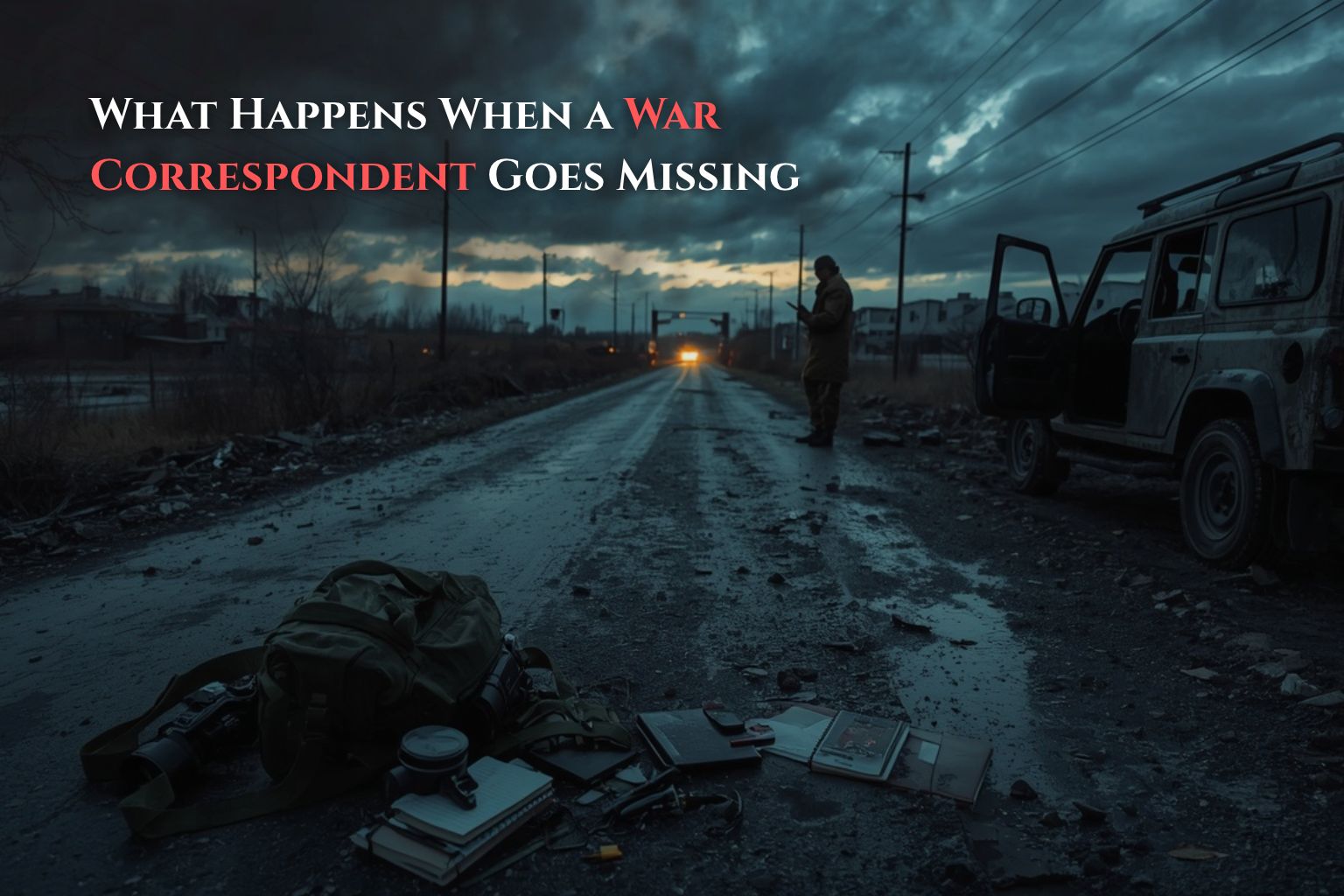
War correspondents are expected to check in regularly. Their messages are often short, such as saying they are safe at the hotel, leaving the front, or will file soon. If a message does not arrive, editors cannot quickly tell if the reporter lost power, changed plans, was hurt, detained, or taken.
This uncertainty shapes the first hours of a search. The newsroom must confirm its information, reach out to contacts on the ground, and avoid anything that might make things worse. When a war correspondent goes missing, it becomes both a safety emergency and a tough information challenge.
A Missed Check-In Starts the Process
Journalists heading into conflict zones usually follow a risk assessment and communication plan. The Committee to Protect Journalists recommends that reporters look at battlefield risks, set up emergency contacts, and plan their gear before they go.
If contact stops, editors check the agreed check-in time, the reporter’s travel plans, and the last message sent. They need to know where the journalist was headed, who was driving, and which military groups controlled the route.
A missed call gives the newsroom a starting point to work backward from.
The Last Known Route Matters
A reporter might change direction after hearing about fighting, meeting a source, or finding a road closed. If they don’t share these changes with editors, the search gets harder.
Local drivers and fixers often know which roads were mined, where shelling happened, which checkpoints were open, and where phone coverage was lost. Hospitals, hotels, press centers, and local journalists can help determine whether the reporter arrived or kept moving.
In Jeff McCoy’s Bobby Wallace: Back Into the War, Bobby arrives in Chișinău, Moldova, before heading to Ukraine. His driver, Maksym, warns him about mined roads, restrictions, and the risks journalists face. Maksym gives Bobby a phone number and a backup address in case regular communication does not work. This scene shows that backup plans should include people and places, not just technology.
Lost Contact Has Several Possible Causes
The newsroom must think about several possible reasons:
· damaged phones, empty batteries, or failed networks
· injury, illness, or disrupted transport
· arrest at a checkpoint or military detention
· abduction by an armed group
· an unreported change of route
If editors assume abduction too soon, they might spread false information. But waiting too long can waste precious time. Editors need to check every lead and keep the reporter’s family and safety team updated.
Detention Can Be Difficult to Confirm
Journalists might be stopped if soldiers misunderstand their papers, suspect spying, or dislike their reporting. Different armed groups may control nearby areas, so one group might not know about a detention made by another.
Bobby experiences this uncertainty when soldiers handcuff him and place him with detainees. His press status offers no immediate solution once his captors view him as a possible threat.
According to the International Committee of the Red Cross, journalists working in armed conflict are generally protected as civilians unless they directly participate in hostilities. That protection may still be difficult to establish during a chaotic encounter.
Communication Technology Has Limits
Mobile and satellite phones help reporters stay in touch, but any system can fail. Batteries die, signals drop, and devices can break or draw unwanted attention. A good safety plan includes regular check-ins, backup contacts, and a clear plan for missed deadlines.
The new SAT phone Bobby uses later shows why backup communication matters. Still, someone has to be waiting for the call and ready to act if it does not come.
A Missing Reporter Can Become Part of the Information War
Being captured brings another risk. A journalist might be forced to record a statement, repeat false information, or publish something that helps their captors.
McCoy explores this through Susan, who is forced to type fabricated claims while being held captive. Her situation leaves editors with a hard question: can a message be trusted when the sender may be writing under threat?
This issue ties into the ethics of war reporting. Newsrooms need to check this kind of material before using it as proof that a missing journalist is safe.
Deciding What to Make Public
Public attention can bring witnesses, help, and pressure. But it can also affect talks or make things more dangerous. News organizations often talk with the family, security experts, officials, and press-freedom groups before sharing names or details.
There is no single response that works for every disappearance. The decision depends on the location, who controls the area, and what evidence is available. When a war correspondent goes missing, the search begins with small facts: a missed call, an unfinished route, a driver’s warning, or an unconfirmed checkpoint. Together, they help a newsroom build a credible account of what happened. They also show why careful preparation remains central to war reporting in conflict zones.