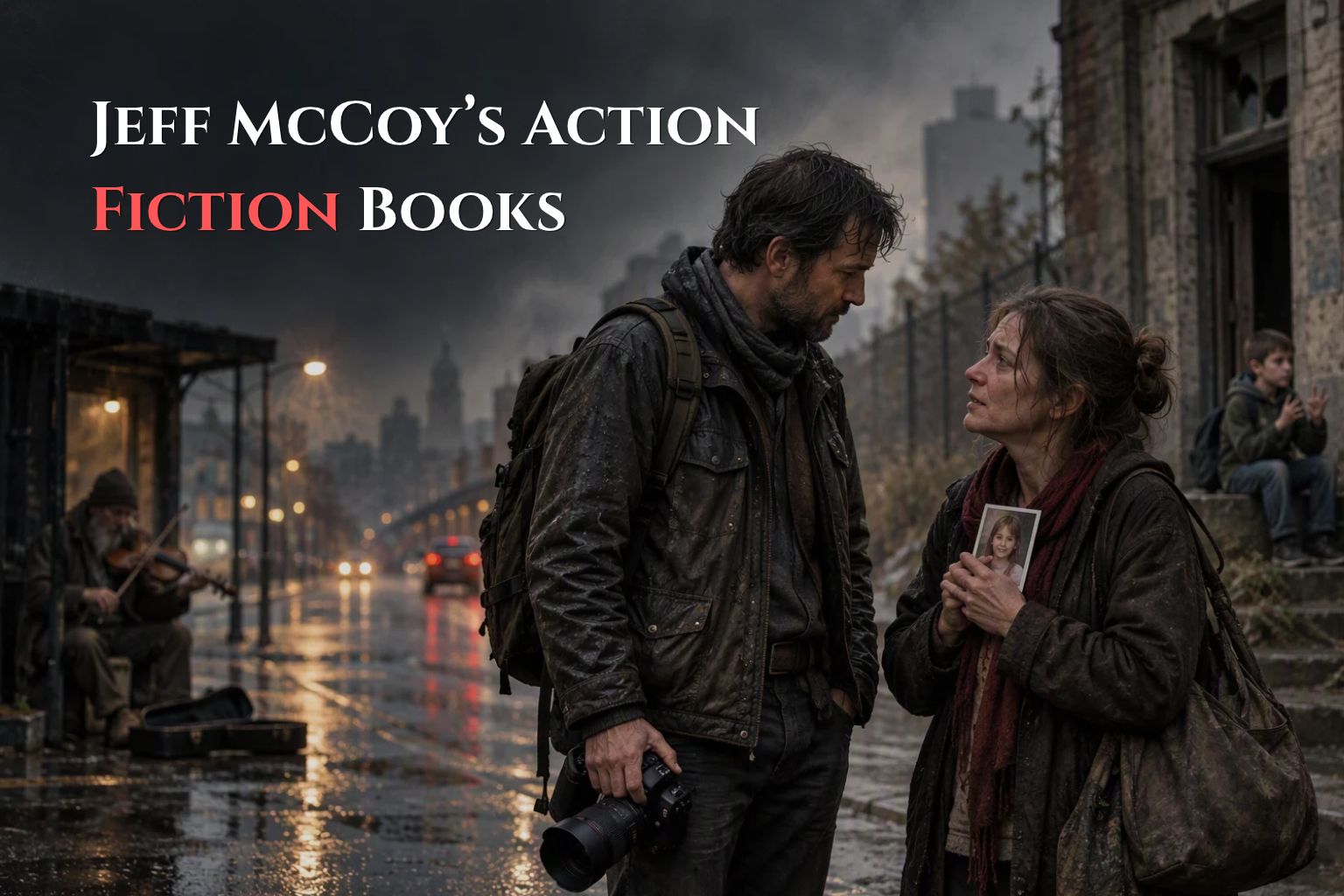
People often forget quickly. News moves on to the next war, crime, or scandal, but those affected still live with the aftermath. A mother keeps searching for her child. A journalist comes home with trauma. A deaf boy sleeps in a closet because adults have let him down.
Jeff McCoy’s fiction focuses on these unresolved human stories. In Finding Anna, Finding Bobby, and Saving Lucas, he follows people who are ignored by institutions and forgotten by the news. McCoy gives them names, backgrounds, choices, and relationships that drive the story.
Three Novels Share One Moral Concern
The settings are very different. One novel takes place during the war in Kosovo. Another moves through newsrooms, trafficking cases, corruption, and homeless camps. The third follows the attempt to reopen a Catholic school for deaf children in a Los Angeles neighborhood controlled by gangs.
Yet each novel asks a related question: What happens when a person becomes easy for everyone else to ignore?
McCoy shows the answer through what his characters do. Someone pays attention, takes time to understand, and chooses to get involved, even when it’s hard. Compassion becomes a choice that brings real consequences.
Finding Anna Looks Past the Battlefield
In Finding Anna, Bobby Wallace is on a combat assignment and hopes to win a Pulitzer Prize. He views the war through his camera and his career goals. Meeting Anna Stellonko changes how he sees everything.
Anna has lost both her home and her husband. During an attack, she was separated from her ten-year-old son, Jacob. She keeps his photo with her as she moves through the chaos. Even after an officer warns Bobby not to get involved, he goes back to Anna, shares food, listens to her story, and tries to help.
This choice shifts the focus to civilian life. Kosovo becomes the setting for one mother’s difficult search. Anna feels both fear and grief, but also has a strong sense of purpose. Her determination drives the story and leaves a lasting impact on Bobby, even after his assignment is over.
Finding Bobby Stays After the Applause
Winning the Pulitzer does not heal Bobby. He returns home with nightmares, panic, and guilt, and starts to rely more on alcohol. While his newsroom celebrates, he finds it hard to take even a simple photo without thinking of those who died.
McCoy puts Bobby back among the people he once reported on. Bobby meets trafficking victims, people dealing with corruption, and a homeless community often talked about as just a problem. Inside the camp, he finds people with humor, sadness, memories, and talent. Winston, who used to play violin for the National Symphony, challenges what people think they know about homelessness.
The way we talk can make people invisible. An editor wants victims who will turn a trafficking story into a “tearjerker.” Officials argue about whether to fine people for feeding the homeless. These moments show the gap between public messages and real suffering. Bobby begins to close that gap by listening, coming back, and seeing people as more than just parts of a story.
Saving Lucas Centers a Child Lost in the System
Lucas is a deaf runaway who lives in an abandoned school. Father Mark Rossi connects with him using sign language and finds out Lucas has survived on his own for months after leaving foster care. Abuse, neglect, homelessness, and a broken protection system led him to this point.
Communication is the first step, but trust takes more time. Lucas knows adults might leave, betray him, or make choices about his life without asking him. Father Mark has to keep coming back. Rebuilding the Catholic Deaf Academy gives Lucas and other deaf children a place to learn, connect, and feel part of a larger Deaf community.
Volunteers, clergy, staff, and residents all have decisions to make about the school. McCoy shows that caring for others is a shared effort, and there are no easy answers.
Why These Characters Feel Like People, Not Causes
McCoy’s reporting background informs his attention to pressure, hierarchy, and the gap between an official statement and private reality. His fiction gains weight through consistent choices:
- Suffering never becomes a character’s entire identity.
- Vulnerable people influence decisions rather than serve as scenery.
- Helpers remain flawed, and good intentions do not guarantee good results.
- Consequences continue after public interest fades.
A moving novel cannot repair foster care, end trafficking, house a community, or stop a war. Research on fiction and empathy suggests that emotional involvement can influence empathy, though the effect is not automatic. Readers must enter the characters’ lives enough to care.
A Place in the Story Means Time and Dignity
McCoy shows his characters as real people. Anna is a mother with a goal. Winston is a musician with a history. Lucas is a child trying to find out if safety can last. Bobby is a witness who also needs support.
Together, McCoy’s three novels show how fiction can matter to society. A novel can keep our attention when a headline cannot. It can follow the effects of harm into the next day, the next choice, and the next relationship. It can ask readers to see the person behind a statistic, case number, or problem that has been pushed aside.
McCoy makes sure that person stays visible long enough for us to truly see them. Recognizing someone’s story is the first step toward taking responsibility.