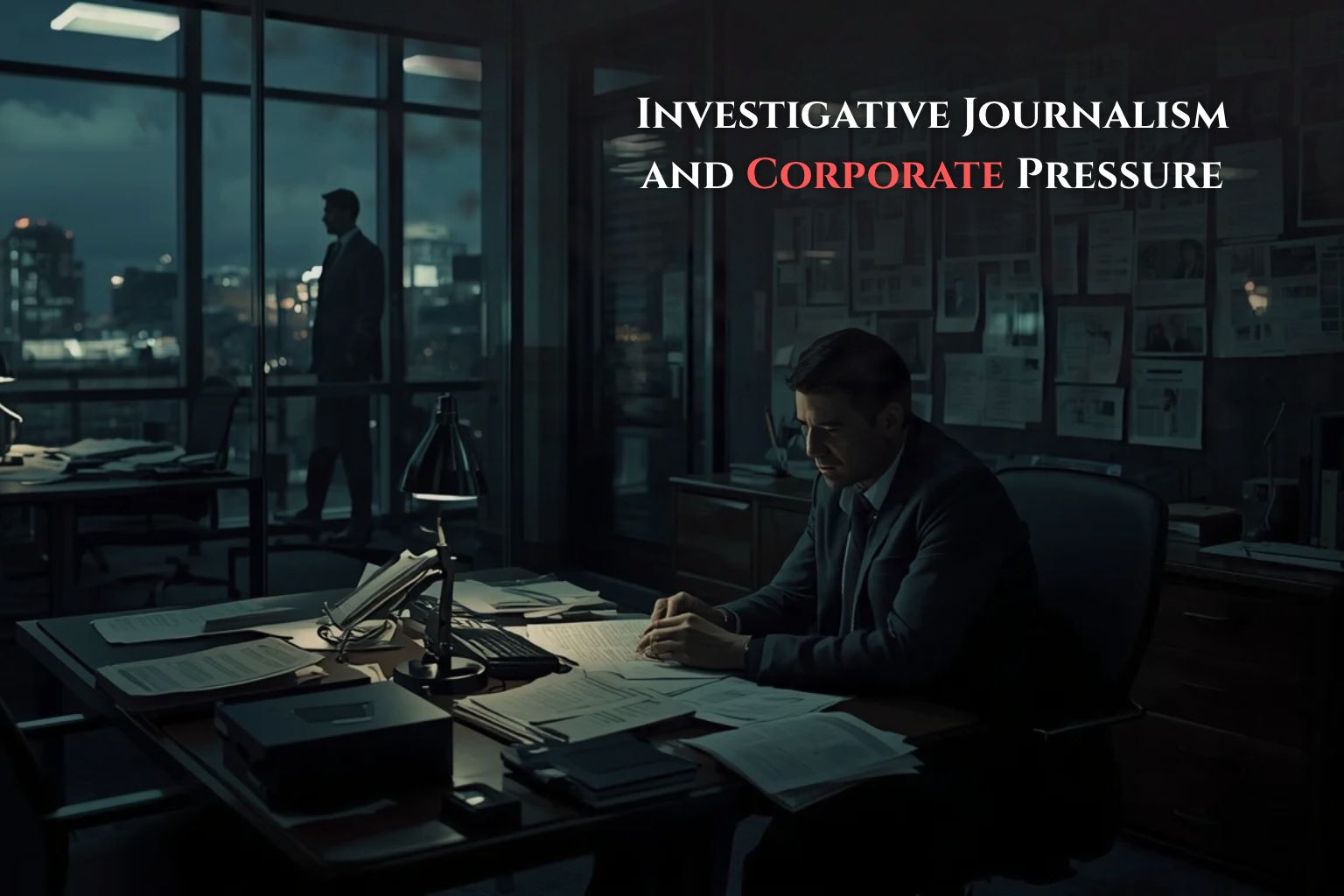
An investigative reporter might spend months developing a story, carefully checking facts and keeping sources safe. But sometimes the biggest challenge comes from inside their own company. If a new owner wants quick profits, an expensive investigation can lose its funding.
Corporate pressure rarely comes as a direct order to stop a story. More often, it shows up in everyday business choices that quietly shape what a newsroom can cover. This tension is central to Jeff McCoy’s Finding Bobby, where journalism, ownership, and personal conscience often clash.
What Corporate Pressure Looks Like Inside a Newsroom
People often ask if media owners directly tell editors what they can or cannot publish. While that does happen, the pressure is usually less obvious.
It may appear when:
- a reporter is moved away from a sensitive subject;
- an investigation receives no travel or research budget;
- editors reduce staff and page space;
- legal review becomes too expensive;
- coverage involving an owner, investor, or advertiser keeps getting delayed.
Each of these choices might seem practical on its own. But together, they shape which facts the public gets to see. Reporters may start steering clear of topics that could put their jobs at risk. Once self-censorship takes hold, there is no need for a formal order.
Why Investigative Reporting Is So Easy to Squeeze
Investigative journalism follows the money, uncovers hidden connections, checks official statements, and lets sources speak safely. This kind of work takes time and is hard to plan for financially.
A UK Parliament review called investigative journalism labor-intensive, costly, and legally risky. An investigation might take months and still not lead to a story. Even accurate reporting can end up in court.
Corporate managers often look for quick, measurable results. Breaking news, opinion pieces, and articles designed for search engines bring in traffic fast. But a reporter spending months on court records seems costly on paper. This puts watchdog journalism at risk during layoffs, mergers, or budget cuts.
Does Corporate Ownership Always Harm Journalism?
No. Ownership alone cannot predict every editorial outcome.
A 2025 review of 56 studies found that media ownership influenced journalistic content in most cases. However, another 2025 study comparing corporate and independent local newspapers found few major differences on most points.
The real question is how an organization uses its power. Some owners support big investigations and shield editors from business pressure. Problems start when executives quietly change assignments, hide conflicts of interest, or punish reporters whose work could hurt business ties.
Finding Bobby Makes the Pressure Personal
In Finding Bobby, Bobby Wallace helps create a successful podcast about the conflict in Ambazonia. The program wins recognition and reaches listeners across 52 countries. Its journalistic value is clear.
Richard Brandenburg Jr., the new owner of Global News & Photo, sees the publication as just part of his bigger business plans. He hopes to buy more newspapers and use Bobby’s reputation to help. When Bobby’s editor stands up for the podcast, Brandenburg acts to protect his control. Bobby is moved to a struggling newspaper in Youngstown, and the podcast is dropped.
This moment shows what statistics can miss. Bobby’s work is popular with readers, but someone far from the newsroom can still change his path. Later, his local reporting reveals another risk: a wealthy person might try to sway the newspaper that is investigating him.
McCoy’s background in reporting makes these conflicts feel real. Editors worry about costs, reporters focus on protecting sources, and owners think about growing the business. These priorities come together when it is time to decide if an investigation should go on.
What Protects Editorial Independence?
Newsrooms need protections that still work when a story is costly or uncomfortable.
A Real Editorial Firewall
Editors should make the decisions about what gets reported. Owners, advertisers, and donors should not be able to approve stories or pick what gets investigated. Having clear, written policies helps protect this independence.
More Than One Source of Revenue
Subscriptions, memberships, grants, partnerships, and reader donations can help newsrooms avoid depending on a single big funder. The Global Investigative Journalism Network also suggests being open about donors and keeping full editorial control.
Time, Legal Support, and Strong Editors
Reporters need safe ways to communicate, access to records, legal support, and editors who will question weak evidence. Working together with local, nonprofit, and national outlets can share costs and make stories harder to silence.
Investigative Journalism Can Survive
Corporate pressure is likely to stay in journalism because newsrooms need funding, staff, technology, and legal help. Whether investigative reporting survives depends on who makes editorial decisions and if the newsroom can defend them.
Readers can look into who owns a news outlet, how it shares information about its funding, whether it corrects mistakes, and if its investigations are based on solid evidence. Finding Bobby shows how fast a reporter’s goals can clash with an owner’s agenda. Investigative journalism can survive if organizations give reporters the freedom and support to follow the facts wherever they lead.