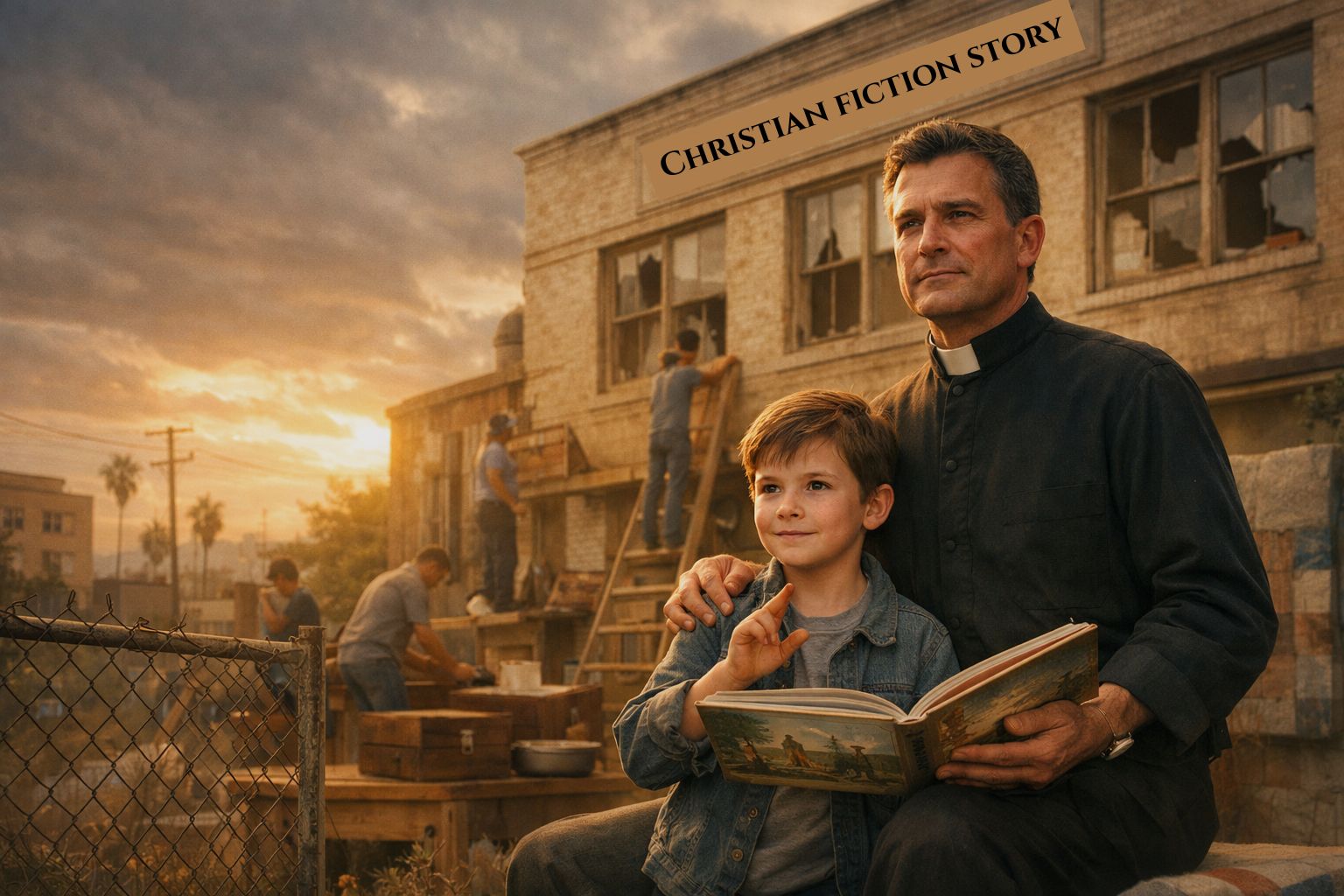
Father Mark Rossi arrives in Los Angeles expecting to lead a nearly completed Catholic Deaf Academy.
But when he arrives, he sees broken windows, a damaged fence, and drug dealers in the yard. The building has turned into a shelter for crime. The repair money is missing, and the people in charge have vanished. Now, church leaders want to close the project.
Walking away would make sense.
Father Mark stays.
That choice sets the stage for Jeff McCoy’s Saving Lucas, a Christian fiction novel where faith is tested by real-life decisions. The story follows a priest as he tries to rebuild a school, protect a vulnerable child, and help a community that has been overlooked for years.
Faith Begins With Showing Up
Father Mark comes without money, political power, or a big team. He has a plan for the Catholic Deaf Academy, but most of what he needs is gone.
The building needs major repairs. The neighborhood is controlled by gangs. Even the police warn him that remaining there could cost him his life.
His faith does not remove those problems.
It gives him a reason to face them.
That difference is important. In Saving Lucas, faith leads to action. Father Mark checks the building, reaches out to donors, organizes volunteers, handles permits, and finds ways to keep the project going. He prays, but he also grabs tools and starts fixing things.
The work is slow, costly, and risky. Every step forward seems to bring a new problem.
Still, he returns the next day.
Courage Does Not Mean Feeling Safe
Father Mark often knows exactly how dangerous the situation is.
Gunfire happens often. Gang members threaten him. Equipment gets stolen, and volunteers are put in danger. At one point, an attack wipes out much of the progress at the school.
Courage in the novel comes through those moments.
You see it when Father Mark first enters the damaged building. You see it when he stands up to men who think the property is theirs. You see it when he keeps defending the school, even after others tell him to leave.
His courage is not presented as fearlessness. He understands that a poor decision could hurt the people working beside him.
That creates a real conflict. How far should someone go for a mission? When does determination become recklessness? Who carries responsibility when other people are placed in danger?
The novel lets these questions stay with Father Mark throughout his journey.
Lucas Changes the Meaning of the Mission
The school begins as a project for the deaf community.
Then Father Mark finds Lucas.
Lucas is a deaf child living inside the abandoned building. He has survived on the streets after being neglected and failed by the foster care system. He does not trust adults easily, and he has good reason.
Father Mark can communicate with him through sign language. That first conversation changes the direction of the story.
The Catholic Deaf Academy is no longer just an idea. Lucas gives the mission a real, human face.
Helping Him Requires More Than Rescue
Finding Lucas does not solve his problems.
He needs:
- a safe place to live
- food and medical care
- communication he can understand
- protection from further abuse
- an adult willing to earn his trust
Father Mark quickly learns that good intentions are not enough. He must work with social services, church leaders, and child welfare agencies. Some people genuinely want to help. Others are slow, dismissive, or trapped inside systems that have already failed Lucas.
Father Mark has to decide when to follow the rules and when to push back against them.
That responsibility becomes one of the strongest parts of the story.
Responsibility Extends Beyond One Child
Lucas is central to the novel, but the problems around him are larger.
The neighborhood has families who no longer leave their homes because of crime. Deaf people struggle to get education and support. Children are ignored. Women face exploitation. People have learned not to expect help.
The school starts to stand for something the community has not seen in a long time: people who stick around and finish what they start.
Volunteers fix up classrooms. Deaf workers give their time and skills. Neighbors start coming over to see what is going on. Media attention brings in money, but it also adds pressure and more eyes on the project.
Every choice is now out in the open.
Father Mark has to protect the mission while remembering the people it was meant to help.
A Christian Story Rooted in Difficult Choices
Saving Lucas is about faith, prayer, and Christian service, but the real struggles come from everyday responsibilities.
Father Mark has to watch every dollar after the first funds go missing. He faces tough questions from reporters. He needs to keep volunteers safe without leaving the neighborhood behind. He supports Lucas while following the legal rules about child custody.
None of these choices comes with an easy answer.
That is what gives the story weight.
Faith guides Father Mark, but responsibility shapes his next steps. Courage keeps him there when it would be easier to leave. Lucas reminds him why the work is important.
Jeff McCoy’s novel tells the story of people working to rebuild a school in a place most have given up on. As they do, they also begin rebuilding trust, safety, and a sense of community. The result is a Christian fiction story built on action, tough choices, and the call to care for people who have been forgotten.