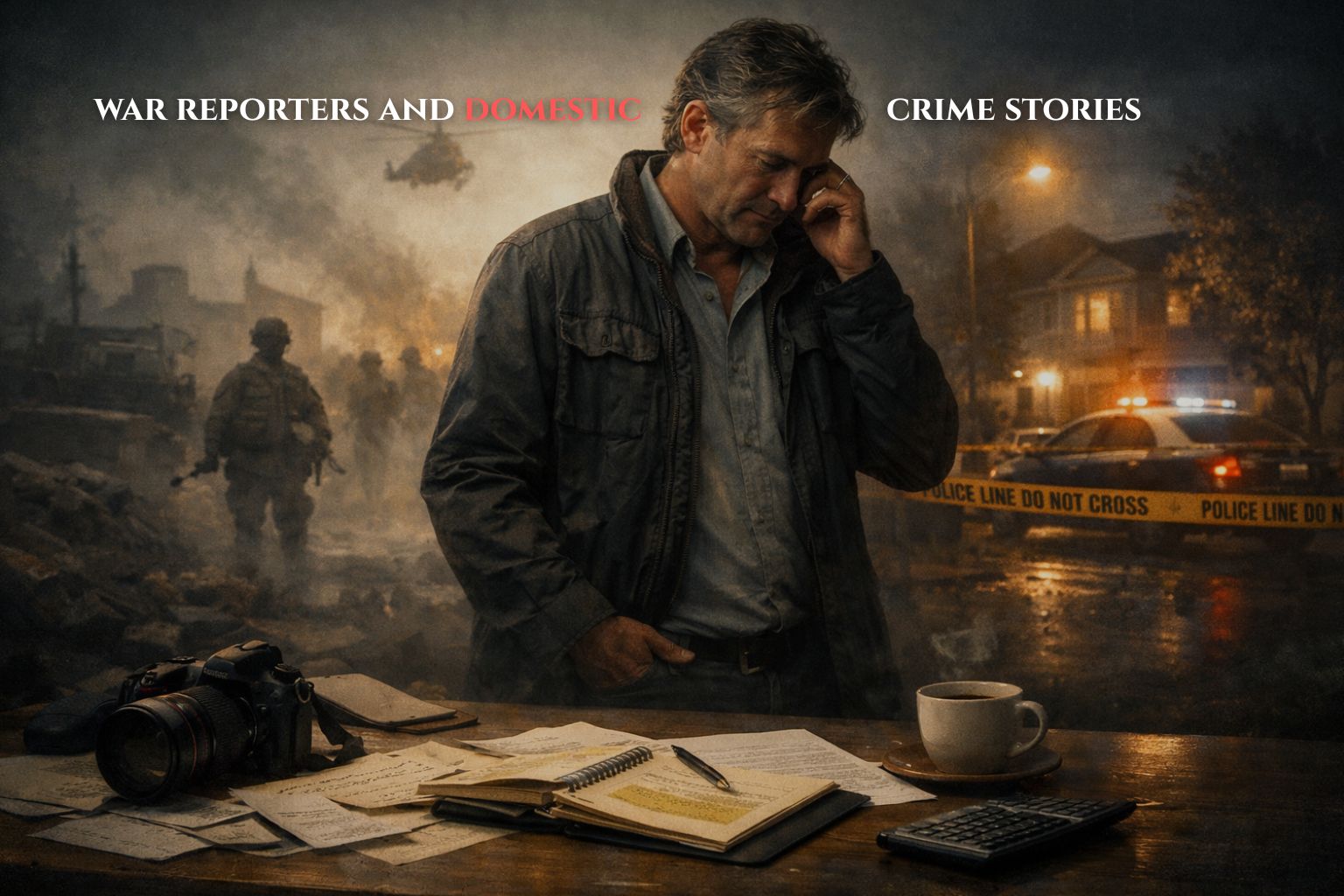
A reporter might spend years in war zones, witnessing bombed buildings, refugee camps, armed conflict, and the aftermath of violence; things most people only read about in the news.
Then he comes home.
Now, a missing person case comes across his desk. Maybe it is a suspicious death or a trafficking investigation. These stories seem smaller than what he covered overseas.
So why does it sometimes feel harder?
That question is the central plot of Jeff McCoy’s Finding Bobby. The novel follows journalist Bobby Wallace as he tries to adjust to life after years spent reporting from some of the world’s most dangerous places. He learns that leaving a war zone does not mean the effects disappear.
The Violence Is Different, but It Still Stays With You
Many people think war reporters get used to difficult stories.
But the truth is usually more complicated.
War correspondents learn to stay focused under pressure. They know how to gather facts, interview witnesses, and keep working even when they have to set their emotions aside. This skill helps them get through dangerous situations.
The problem comes later.
Many journalists hold on to memories from their assignments long after they come home. Sometimes, details from a local crime case can bring those memories back without warning. A victim’s story, a crime scene, or even a photo can trigger feelings that others might not notice.
In Finding Bobby, Bobby is not just chasing another story. He carries years of experience that still shape how he sees the world.
Local Crime Feels Closer to Home
War often happens somewhere else.
Domestic crime happens where people live.
That difference matters.
When a reporter covers violence in another country, there is usually some distance. The place is unfamiliar, the culture might be different, and the people involved are strangers.
A local crime story removes that distance.
The victim might be someone your neighbor knows. The family could live just a few streets away. The community affected by the crime feels familiar.
That makes it harder to stay emotionally detached.
Many crime reporters talk about how hard it is to balance empathy and objectivity. War reporters face this too, but now the story feels personal in a new way.
The Story Is Rarely Black and White
One reason people enjoy investigative journalism fiction is that real investigations are rarely simple.
War reporting often involves obvious danger. You know where the threat is coming from.
Investigating domestic crimes can be much less clear.
A reporter may be dealing with:
- Corruption
- Conflicting witness accounts
- Political pressure
- Community rumors
- Hidden motives
It takes time to find the truth.
Sometimes, the biggest obstacle is not the criminal, but the system around the crime.
This idea is found throughout Finding Bobby. The more Bobby investigates, the more he faces questions without easy answers.
Trauma Changes the Way Reporters See New Stories
This is something many readers do not think about.
Journalists are trained to observe other people’s experiences. They are not always encouraged to examine their own.
After years of covering violence, some reporters find ways to cope. They hide their emotions, keep busy, and move on to the next assignment.
Eventually, those experiences demand attention.
A routine crime story can suddenly feel much heavier than expected because it connects to something deeper.
That does not make a journalist weak. It makes them human.
The best reporters often care deeply about the people in their stories. The challenge is learning how to care without letting it overwhelm them.
Why Bobby Wallace’s Story Feels Real
What makes Finding Bobby interesting is that the story is not just about solving problems or uncovering facts.
It investigates what happens to the person conducting the investigation.
Bobby’s background as a war reporter shapes every decision he makes. His experiences change how he sees danger, trust, relationships, and even his own future. The crimes he investigates matter, but they are only part of the bigger story.
People who enjoy investigative journalism novels often want believable characters, not just suspense. Bobby’s struggles feel real because they reflect questions many journalists face after years of covering tough stories.
War reporting and domestic crime reporting may seem like completely different worlds.
For someone like Bobby Wallace, they are connected.
The stories are different.
The locations are different. But the search for truth, the emotional toll of the work, and the impact these experiences leave behind are very much the same.